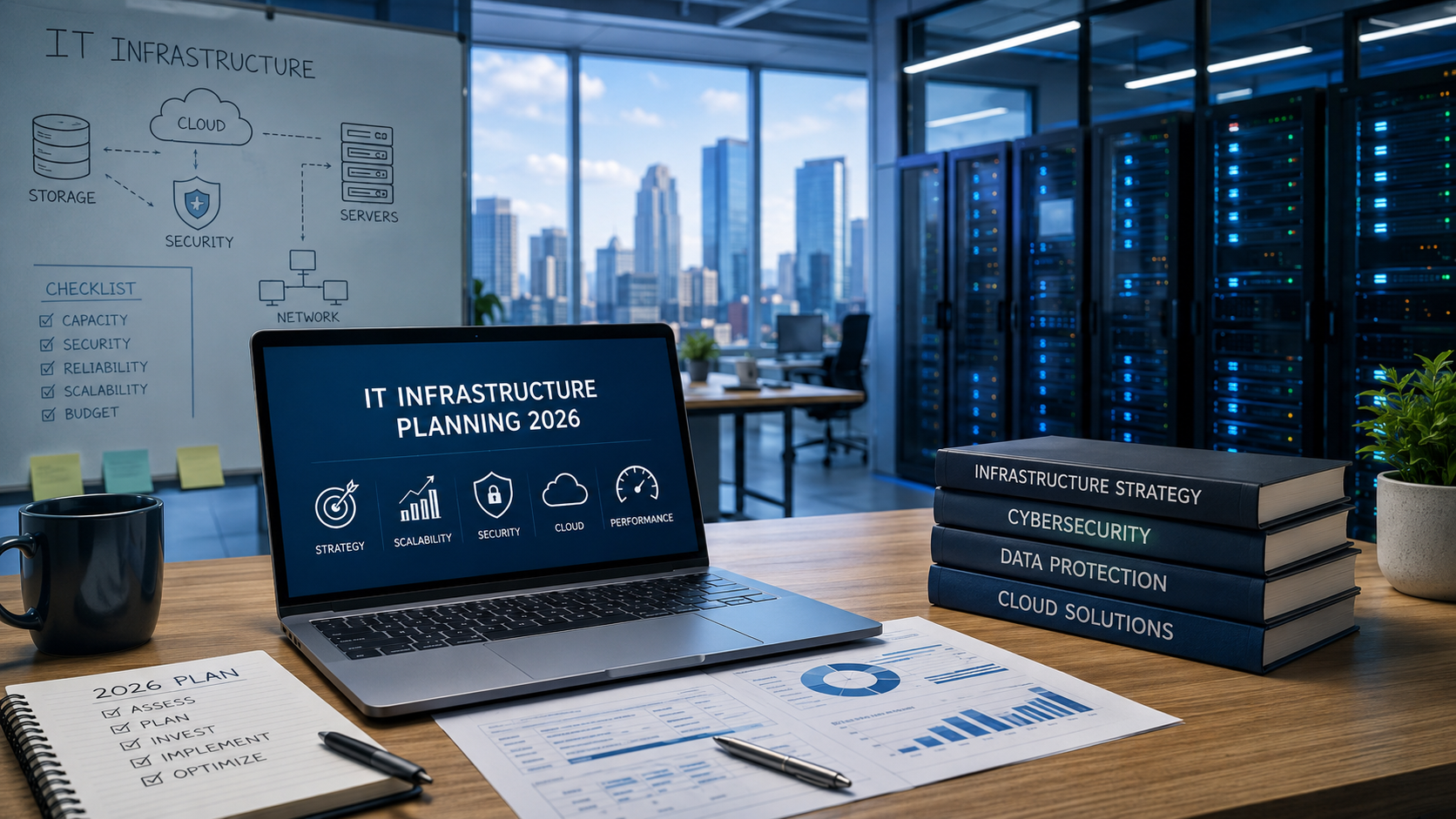
Business growth often exposes weaknesses in existing IT systems. What worked for a small team may struggle under increased demand from more employees, customers and data.
Effective IT infrastructure planning is not about buying more equipment. It is about aligning technology with business goals, ensuring systems can scale without unnecessary cost or complexity.
This guide highlights the key areas businesses should focus on when planning infrastructure in 2026.
Why IT Infrastructure Planning Matters
Modern infrastructure goes beyond servers and networks. It now includes cloud platforms, remote access tools and cybersecurity systems.
Businesses must balance several priorities:
- Supporting growth without overspending
- Maintaining system reliability
- Managing cloud and software costs
- Protecting data and operations
Infrastructure should be treated as a connected system, not separate purchases.
Start With Business Needs
Planning should begin with business goals, not hardware.
Ask:
- How fast is the company growing?
- Will new locations or services be added?
- Which systems are critical to operations?
- How quickly is data increasing?
Understanding these factors helps avoid unnecessary spending and ensures infrastructure supports future growth.
Assess Your Current Setup
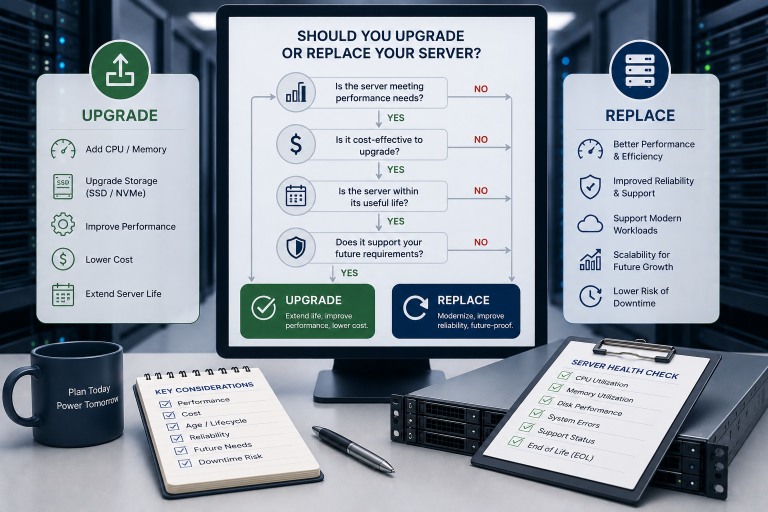
Before upgrading, review what you already have.
Focus on:
- Hardware: age, performance and support status
- Applications: critical systems and dependencies
- Cloud services: usage and costs
- Network: speed, reliability and coverage
- Security: access control, backups and protection
This helps identify what to keep, upgrade or replace.
Choose the Right Infrastructure Model
Businesses typically use one of three approaches:
- On-premises: full control and predictable performance
- Cloud: flexibility and scalability
- Hybrid: a mix of both
Most growing businesses benefit from a hybrid approach, allowing gradual upgrades without major disruption.
Plan Servers and Devices Carefully
Avoid buying based only on current needs or overinvesting in unused capacity.
Instead:
- Estimate realistic growth
- Choose systems that can expand
- Standardise employee devices for easier management
Also review outdated systems. For example, Windows 10 reached end of support in October 2025, making upgrades essential for security.
Manage Data and Backups Properly
Data grows quickly and must be organised.
A good strategy includes:
- Separating active and archived data
- Protecting sensitive information
- Planning storage growth
Backups are critical. Follow the 3-2-1 rule:
- Three copies of data
- Two storage types
- One offsite copy
Regular testing ensures backups actually work when needed.
Strengthen Network and Security
A strong network supports everything else.
Review:
- Internet speed and reliability
- Wi-Fi coverage
- Backup connections
Security should be built into infrastructure from the start:
- Multifactor authentication
- Regular updates
- Access control
- Endpoint protection
Cybersecurity is now a daily business responsibility, not a one-time setup.
Budget for Long-Term Costs
Infrastructure costs go beyond purchase price.
Include:
- Hardware and software
- Cloud subscriptions
- Maintenance and support
- Security and backups
Focus on total cost over time, not just initial spending.
Avoid Common Mistakes
Businesses often:
- Buy only for current needs
- Overspend without a growth plan
- Move everything to the cloud unnecessarily
- Ignore outdated systems
- Treat file syncing as backup
Avoiding these mistakes improves efficiency and reduces risk.
Quick Planning Checklist
- Review business growth plans
- Audit current systems
- Identify outdated equipment
- Plan storage and backups
- Strengthen security
- Compare infrastructure options
- Create a 12-month roadmap
Build for Growth
IT infrastructure should support business expansion, not limit it.
By planning carefully, businesses can create systems that are secure, scalable and cost-effective.
Ila Express provides enterprise servers, storage, networking and managed infrastructure solutions to support growing businesses.
Contact Ila Express to plan your 2026 IT infrastructure.
Frequently Asked Questions
What is IT infrastructure planning?
It is the process of designing and managing the technology systems a business needs, including servers, networks, storage and security.
How often should infrastructure be reviewed?
At least once a year, with quarterly updates for fast-growing businesses.
Should businesses use cloud or on-premises systems?
It depends on the workload. Many businesses use a hybrid approach for flexibility and control.
What should be upgraded first?
Unsupported systems, unreliable equipment and weak security areas should be prioritised.